
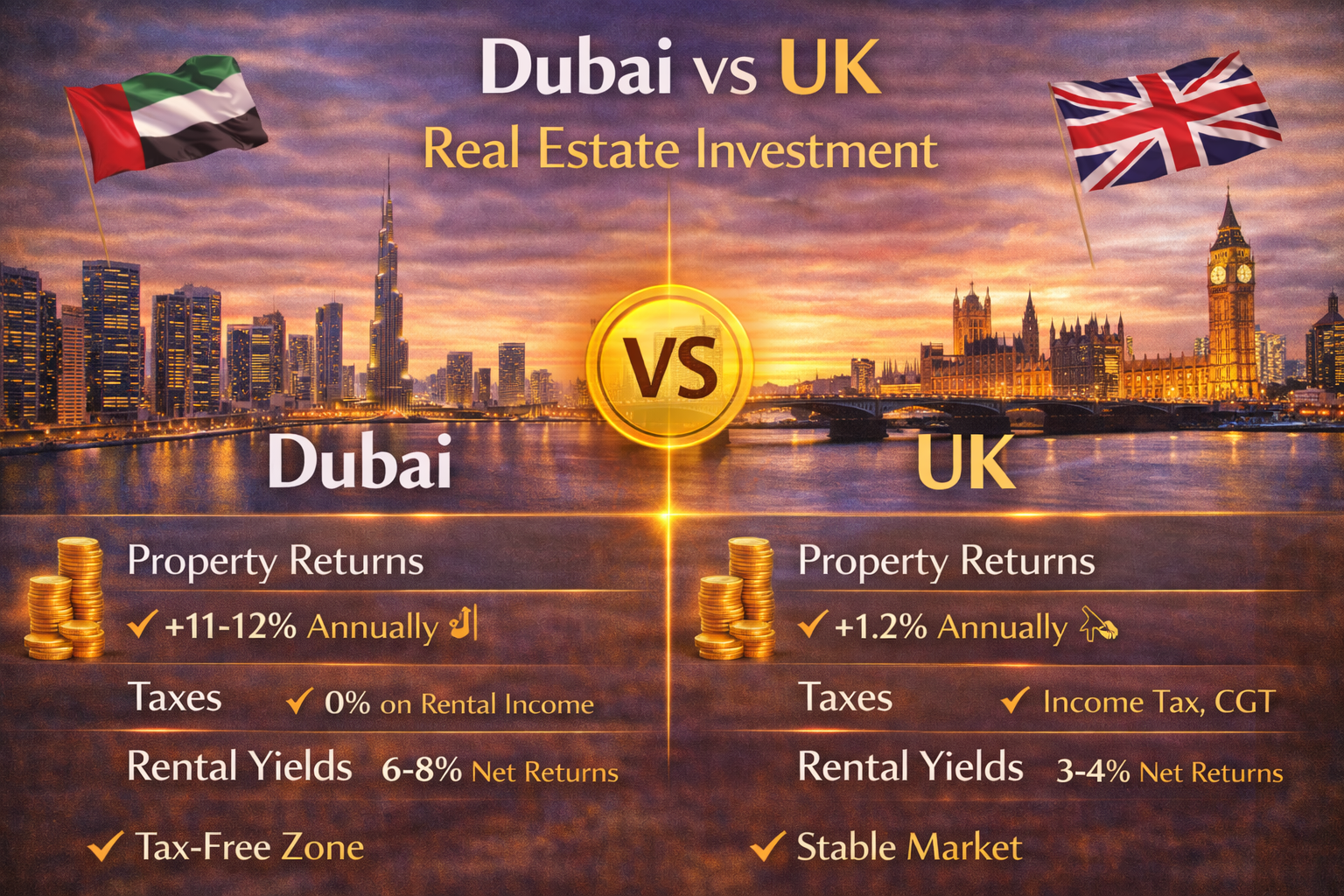
Dubai vs UK Real Estate Investment
Global investors frequently compare established markets like the UK with high-growth destinations such as Dubai. The debate around Dubai vs UK Real Estate Investment has become even more relevant in 2026 as investors seek higher rental yield, tax efficiency, and long-term stability.
Both markets offer unique advantages, but they differ significantly in returns, taxation, regulation, and investor benefits. This guide provides a data-driven comparison to help you make an informed decision.
Direct Answer: Dubai vs UK Real Estate Investment – Which Is Better?
Dubai generally offers higher rental yield (6–9%), zero income tax on rental income, and long-term residency benefits. The UK provides market stability and global recognition but has lower yields (3–5%) and higher property taxes. Investors seeking strong cash flow often prefer Dubai, while conservative investors may lean toward the UK.
Dubai vs UK Real Estate Investment: Key Comparison Factors
1. Rental Yield & Cash Flow
Dubai
Dubai property investment delivers strong rental yield, particularly in mid-market areas such as:
- Jumeirah Village Circle
- Business Bay
- Dubai Marina
Typical rental yields: 6%–9%
There is no tax on rental income, significantly improving net ROI.
UK
In major UK cities like London and Manchester:
- Average rental yield: 3%–5%
- Income tax applies to rental earnings
- Stamp duty and annual property taxes increase costs
Net returns are often lower after tax deductions.
Rental Yield Comparison
| Market | Average Yield | Rental Income Tax |
|---|---|---|
| Dubai | 6–9% | 0% |
| UK | 3–5% | Yes |
Dubai outperforms the UK in cash flow efficiency.
2. Tax Structure
Dubai
- 0% rental income tax
- 0% capital gains tax
- 0% annual property tax
UK
- Stamp Duty (up to 12%+)
- Income tax on rental profits
- Capital gains tax upon sale
Taxation significantly impacts long-term returns.
3. Property Prices & Entry Cost
Dubai
- Studios from AED 450,000
- Mid-market apartments from AED 700,000
- Luxury units AED 2M+
UK
- London apartments from £350,000+
- Regional cities £150,000–£300,000
UK entry prices vary widely by location.
4. Market Stability & Regulation
Dubai
- Regulated by RERA
- Escrow protection for off-plan
- Transparent title registration
- Strong foreign investor protection
UK
- Long-established legal framework
- Stable financial system
- Transparent ownership rules
Both markets are regulated, but Dubai’s investor-friendly policies create additional advantages.
5. Capital Appreciation Potential
Dubai
Growth drivers include:
- Population growth
- Corporate relocation
- Infrastructure expansion
- Investor visa demand
Emerging communities such as Dubai Creek Harbour show strong appreciation trends.
UK
Capital growth tends to be slower but stable, particularly in central London and university cities.
Capital Growth Comparison
| Market | Growth Speed | Volatility |
|---|---|---|
| Dubai | Moderate–High | Medium |
| UK | Moderate | Low |
Dubai may offer faster appreciation, while the UK provides slower but steady growth.
6. Residency & Investor Benefits
Dubai
Property investment can qualify for:
- AED 750,000 → Residency visa
- AED 2 million → 10-year Golden Visa
This provides lifestyle and business flexibility.
UK
Property purchase does not automatically grant residency or visa benefits.
Dubai offers stronger immigration-linked investment advantages.
Advantages & Disadvantages
Dubai Advantages
- High rental yield
- Tax-free income
- Residency eligibility
- Growing market
Dubai Disadvantages
- Market cycles
- Currency exposure for non-USD investors
UK Advantages
- Stable economy
- Strong legal protections
- Global property prestige
UK Disadvantages
- Lower rental yield
- High property taxes
- No visa benefit
Who Should Invest Where?
Choose Dubai If You:
- Want high rental income
- Prefer tax efficiency
- Seek UAE residency
- Aim for higher ROI
Choose UK If You:
- Prefer conservative growth
- Want lower volatility
- Prioritize established European markets
Internal Linking Suggestions
- Best Areas to Invest in Dubai 2026
- Minimum Investment to Get a Dubai Golden Visa
- Dubai Property Market Forecast 2026
- Top High Rental Yield Areas in Dubai
2026 Investment Outlook
Dubai’s real estate market continues to benefit from:
- Strong foreign investment
- Infrastructure development
- Stable regulatory environment
The UK market remains stable but faces tax and affordability challenges.
Conclusion
The decision between Dubai vs UK Real Estate Investment depends on your financial goals. Dubai offers higher rental yield, tax-free income, and residency incentives, making it attractive for income-driven investors. The UK provides long-term stability but lower net returns due to taxation.
For investors focused on maximizing ROI in 2026, Dubai presents a competitive advantage—especially when choosing the right area and strategy.
If you’re considering international real estate diversification, consult professional advisors to evaluate which market aligns best with your risk profile and long-term objectives.
FAQ Section
1. Which market offers higher rental yield?
Dubai typically offers higher rental yield than the UK.
2. Is Dubai safer than the UK for investment?
Both are regulated markets, but Dubai offers tax-free income and investor residency benefits.
3. Does buying property in the UK give residency?
No, property purchase alone does not grant UK residency.
4. Is Dubai property tax-free?
Yes, Dubai has no income or capital gains tax on property.
5. Which market is better for long-term appreciation?
Dubai offers faster growth potential, while the UK provides stable but slower appreciation.




Join The Discussion